Built environments
How the places people live and move shape injury and health.
How do architecture and urban design affect health and emergency care?
Matthew J. Trowbridge, Pavel Chernyavskiy
Research
Our 10 research areas, placed where they change emergency care: from home and community, through the emergency department, to the return home and beyond.
View by population:PediatricsGeriatrics
Stage 01 · 2 areas
Emergencies start long before the ambulance. We study the places people live and the conditions that send them to us.
How the places people live and move shape injury and health.
How do architecture and urban design affect health and emergency care?
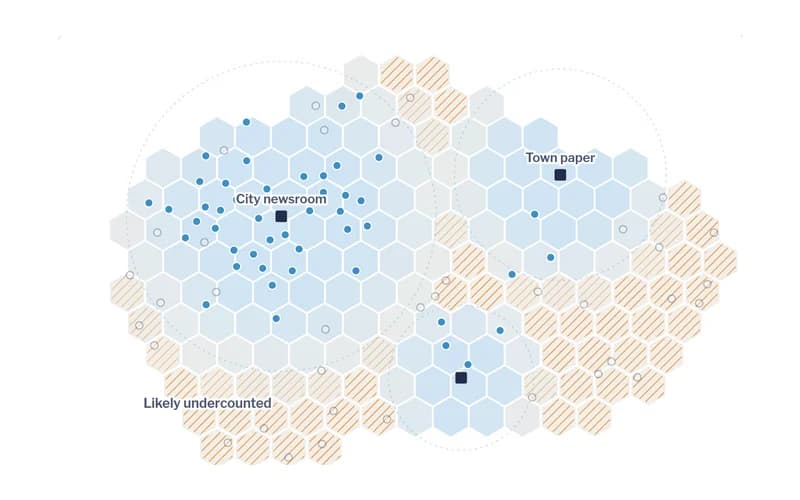
Counting gun violence where local reporting is thin.
Where is gun violence undercounted, and by how much?
Stage 02 · 2 areas
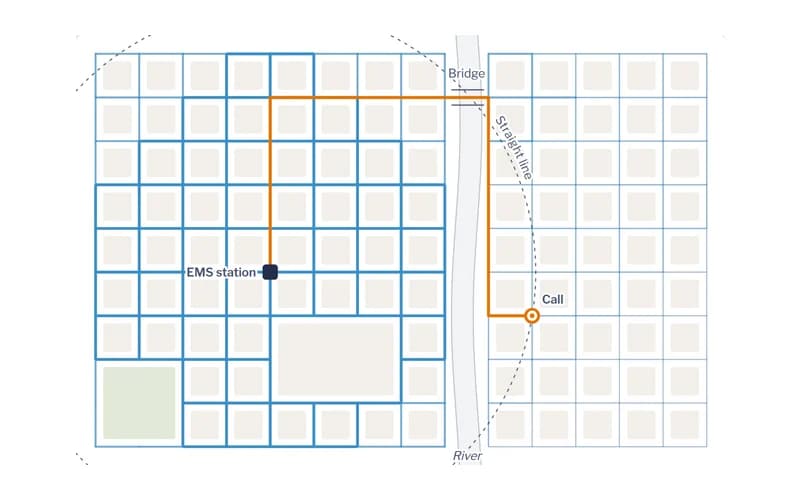
The first minutes decide a lot. Our EMS research works on getting the right care to the right patient faster.
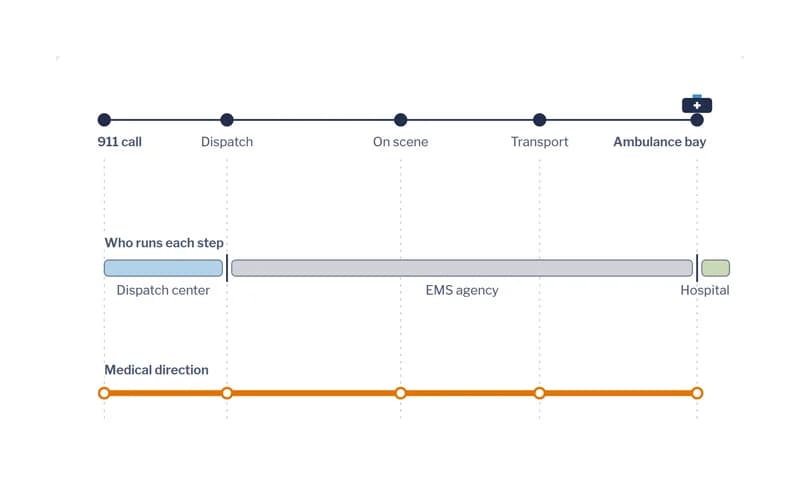
Care from the 911 call to the ambulance bay.
How should EMS systems be organized and medically directed?
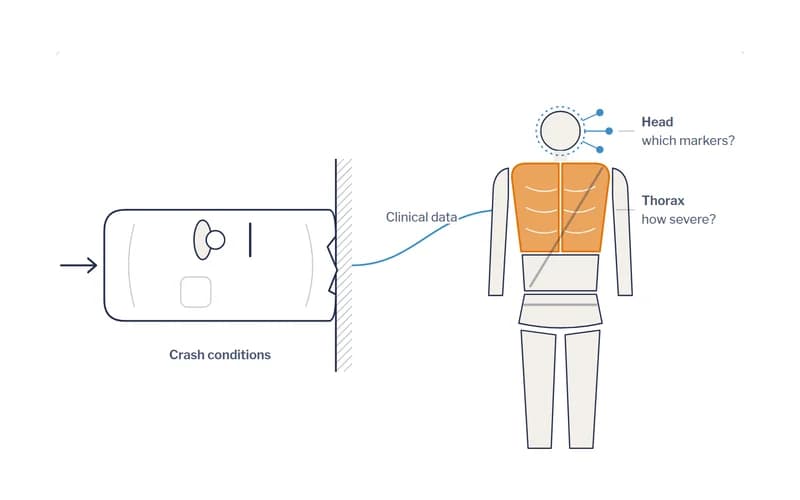
How crashes injure people, from real cases to safer design.
Which crash conditions produce which injuries, and in whom?
Stage 03 · Emergency department
The ED is our living laboratory. It starts at the door: seconds to decide who is sickest and where every patient goes next.
Stage 04 · Emergency department · 1 area
Imaging, labs and judgment under time pressure, and the data behind them.
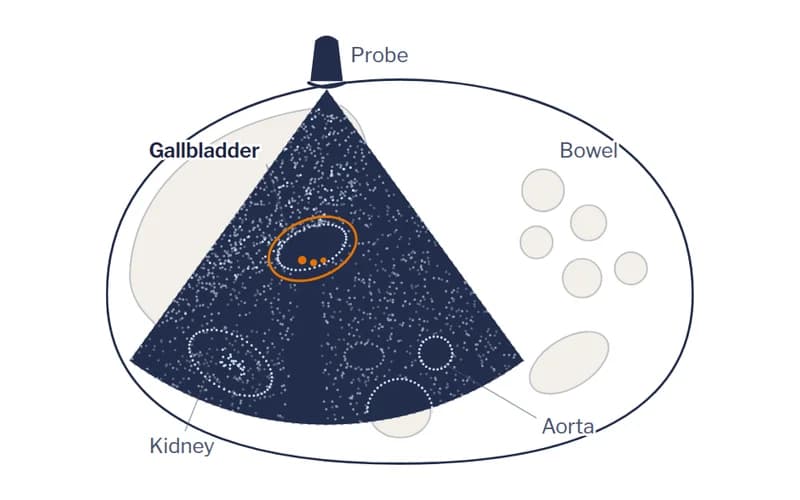
Ultrasound at the bedside answers clinical questions in minutes. This work evaluates bedside imaging: where it helps, where it doesn’t, and new devices that bring imaging to the point of care.
When does bedside imaging change the diagnosis?
How do new imaging devices fit into emergency workflows?
Stage 05 · Emergency department · 2 areas
Poisoning and overdose care, and the first steps toward robotics at the bedside.
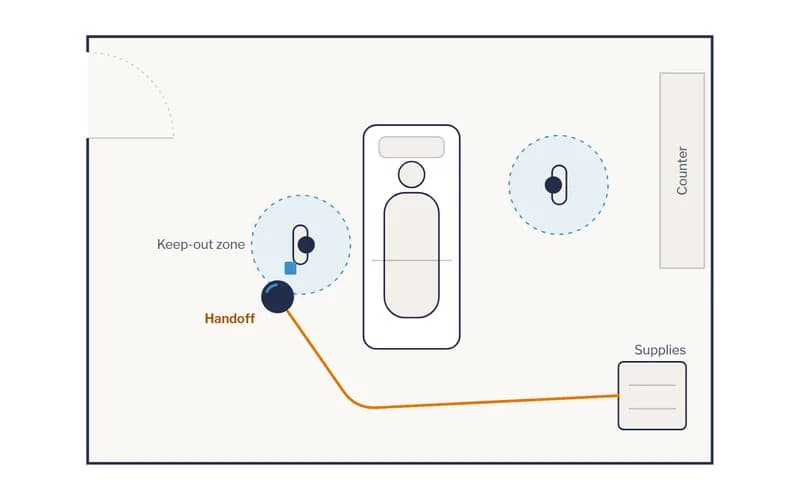
AI that leaves the screen and acts in the room.
Which emergency department tasks could robots safely assist with?
Poisonings, overdoses and treatment that starts in the ED.
What do emergency visits reveal about the course of the opioid epidemic?
Stage 06 · 1 area
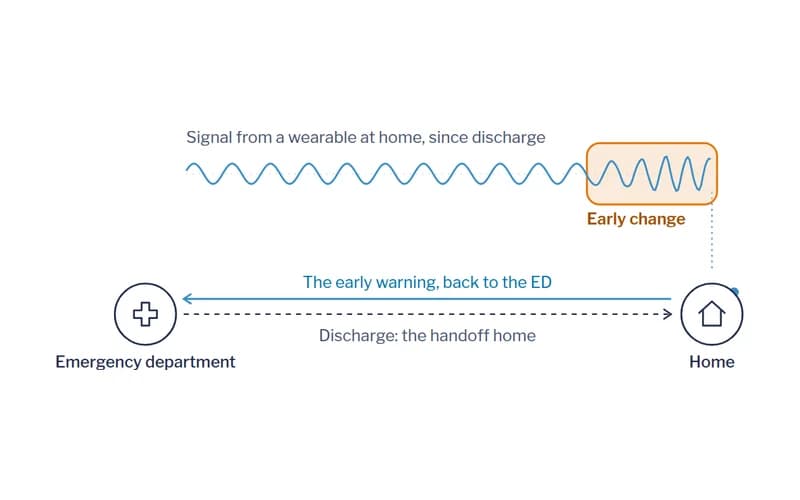
The handoff home is where many patients fall through. We build and test tools that keep them connected.
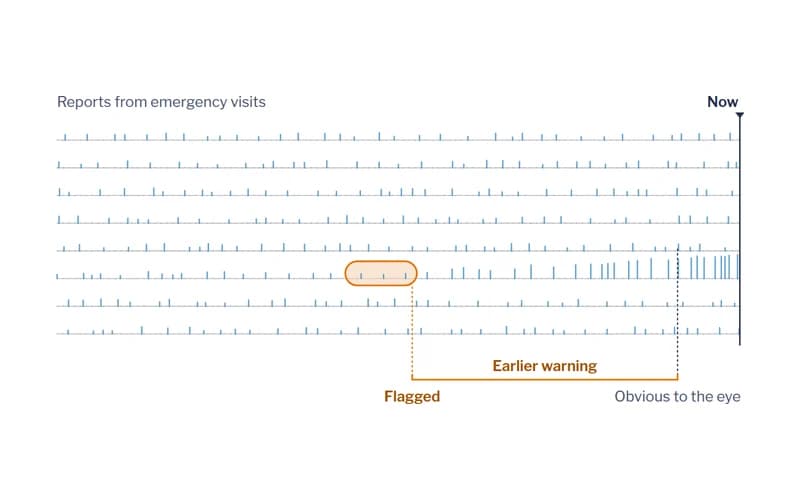
Care doesn’t end at discharge, and the handoff home is where many patients fall through. This work builds and tests digital tools for patients and clinicians, from continuous signals and new markers of labored breathing to a digital solution that connects schools, emergency departments and families around youth mental health.
Which physiological signals warn of deterioration early?
How can emergency departments, schools and families work together on youth mental health?
How should digital tools fit clinical workflows?
Stage 07 · 1 area
The same questions matter everywhere. Our global health work builds and evaluates tools with international partners.
Emergency care depends on systems, and many of the world’s are still being built. This work looks at emergency care beyond Charlottesville and at how data can guide treatment where resources are scarce.
How can emergency care be strengthened in resource-limited settings?
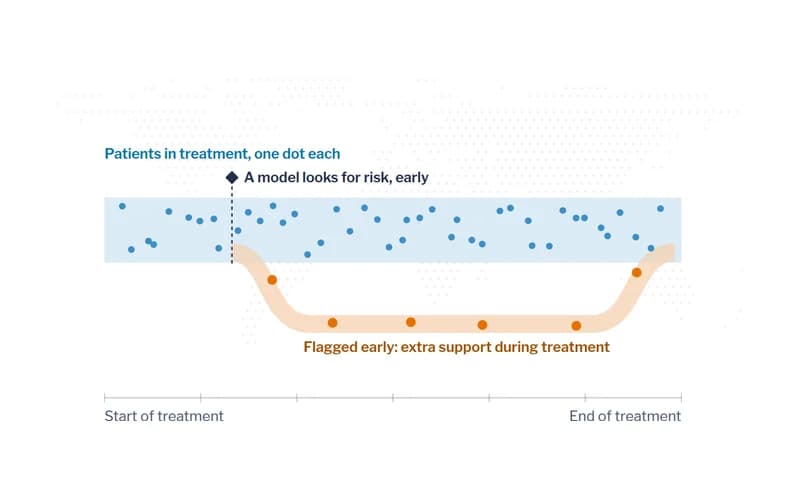
Can predictive models of tuberculosis treatment outcomes help target interventions?
Across every stage
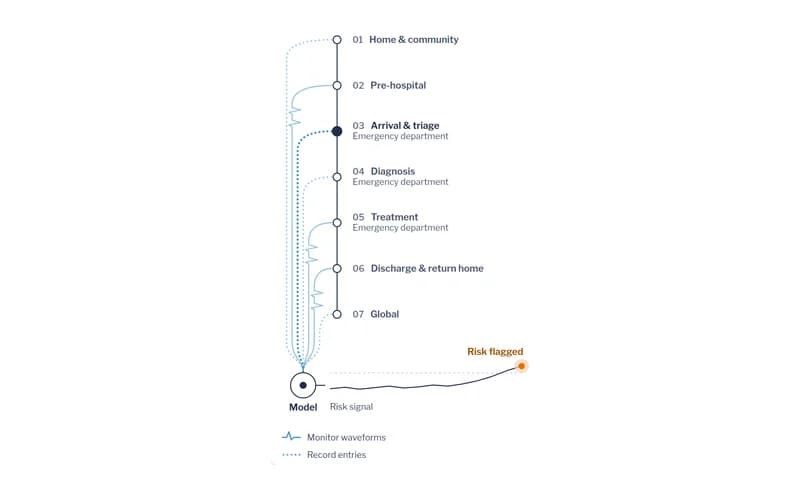
The data, models and methods that run through every stage.
Informatics, AI and data science run through every stage of the journey. Our data scientists engineer pipelines for physiological monitor data and health records; we build and evaluate prediction models on emergency department data, model how patients move through the department, weigh which tests and pathways are worth their cost, and study how to put these tools into practice safely.
Which patients are at risk of a condition no one has diagnosed yet?
How should prediction models be validated before they reach the bedside?
Where do patients wait, and what would shorten it?
Who we work with
Emergency medicine problems do not fit inside one discipline. Engineers and data scientists work on our projects as co-investigators, from the first question to the final evaluation.
Get in touch
Questions about our research, the people behind it, or working together.