Informatics, AI & data science
The data, models and methods that run through every stage.
03Emergency department · Arrival & triage
AI flags emergency patients at risk of undiagnosed dementia.
Read the sourceThe problem
The problem
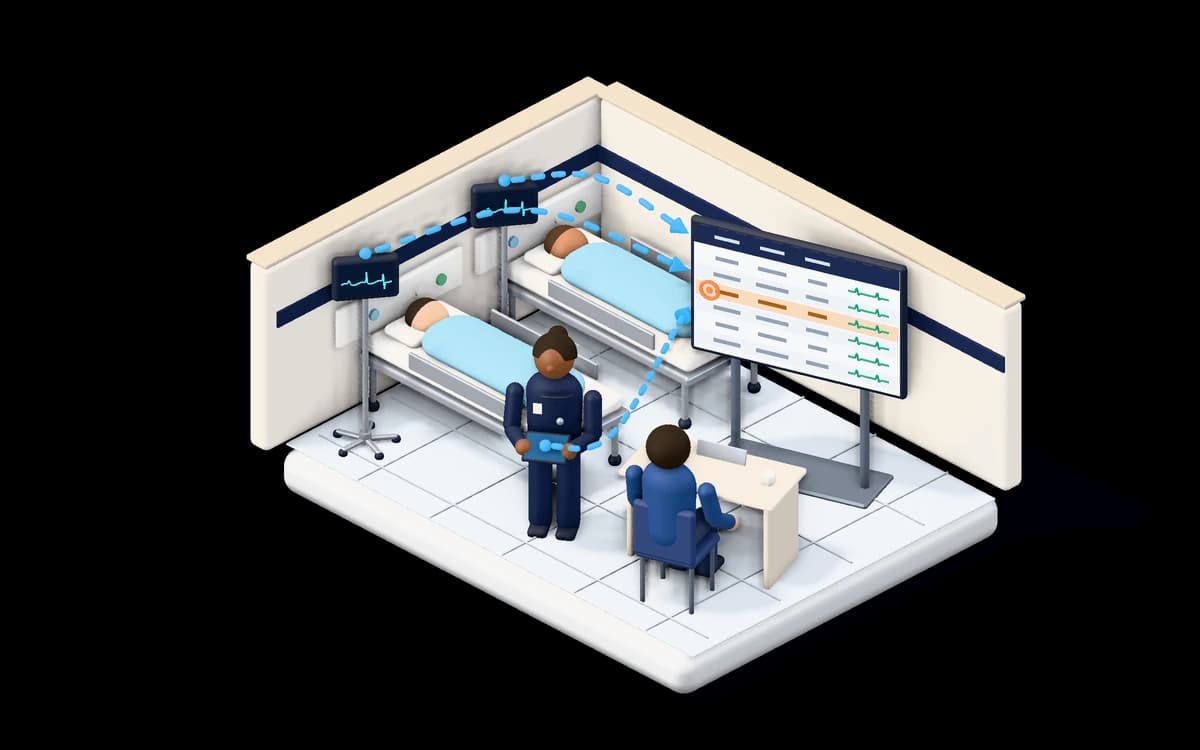
Informatics, AI and data science run through every stage of the journey. Our data scientists engineer pipelines for physiological monitor data and health records; we build and evaluate prediction models on emergency department data, model how patients move through the department, weigh which tests and pathways are worth their cost, and study how to put these tools into practice safely.
Focus areas
What this work wants to know
Which patients are at risk of a condition no one has diagnosed yet?
How should prediction models be validated before they reach the bedside?
Where do patients wait, and what would shorten it?
Which tests change management, and which only add time and cost?
How do we turn raw monitor and record data into research-ready datasets?
Studies, papers & news
Featured work
Study
Neutrophil Activation Test Using RNA Levels to Assist in the Diagnosis of Abdominal Pain
TruNAV · PI: George Glass, MD
Publication
Detection of emergency department patients at risk of dementia through artificial intelligence (PubMed)
Alzheimer’s & Dementia · 2025 · PubMed
Publication
Publication
Factors associated with acute unscheduled care visits for asthma in the All of Us dataset (ScienceDirect)
The American Journal of Emergency Medicine · 2025 · ScienceDirect

R. Andrew Taylor, MD, MHS
Robert E. O’Connor Distinguished Professor & Vice Chair for Research and Innovation
Research interests: Artificial Intelligence · Clinical Decision Support · Informatics · Digital Health
Moira E. Smith, MD, MPH
Assistant Professor of Emergency Medicine
Research interests: Clinical Informatics · Clinical Decision Support · AI in Emergency Medicine · Digital Health

Rupesh Silwal, PhD
Data Scientist
Research interests: Machine Learning · Healthcare Analytics · Large Language Models · Clinical Risk Prediction
Jonathan Swap, MSDS
Data Scientist
Research interests: Machine Learning · Anomaly Detection · Data Analysis
Pavel Chernyavskiy, PhD
Assistant Professor of Biostatistics
Research interests: Spatial Statistics · Bayesian Methods · Hierarchical Models · Population Health
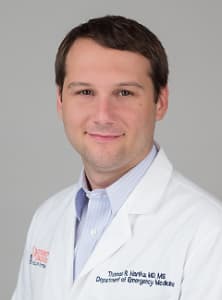
Thomas R. Hartka, MD, MS, MSDS
Associate Professor & EMRO Director
Research interests: Injury Prediction · Crash Biomechanics · Data Science · Prehospital Triage
In this area
Dr. Thomas Hartka and UVA colleagues secure third place in the DARPA Triage Challenge
UVA Emergency Medicine · 2025
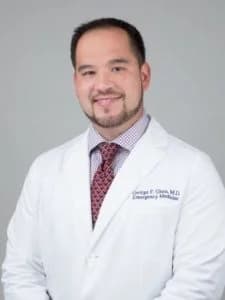
George F. Glass III, MD
Associate Professor & Assistant Research Director, EMRO
Research interests: Operations · Emergency Management · Predictive Analytics · Trauma Biomechanics
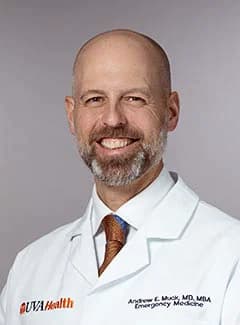
Andrew E. Muck, MD, MBA
Professor & Chair, Marcus L. Martin Distinguished Professor
Research interests: ED Throughput & AI · Medical Direction · Global Health · Medical Education
Get involved
Work with this team
Bring a question, a technology to test, or yourself as a participant.
Contact the team
Questions about this research, the people behind it, or working together.
Train with us
Postdocs, PhD students, fellows and research-minded residents: how to join this work.
Interested in partnering on this work?
Cavalier Catalyst connects industry with emergency physicians, engineers and data scientists.
Join a study
What research in the emergency department involves, how consent works, and who to ask.